

Some claim Trump's victory resulted from Democrats failing to offer a true progressive alternative, but this misreads American culture. The nation's core values derive from its Puritan founders, who emphasized personal responsibility, hard work, and simple living as expressions of religious devotion.
Puritanism was a religious reform movement that emerged in the late 16th and 17th centuries, aiming to "purify" the Church of England from remnants of Roman Catholic practices. At its core, Puritanism emphasized a covenant relationship with God, personal responsibility, and a disciplined, pious lifestyle. Puritans believed in the necessity of hard work, simple living, and moral integrity as expressions of their faith and devotion.
Although these values were initially based on inner discipline and humility, over time they evolved into values centered on external success, where material achievements, status, and power became primary indicators of personal worth. This led to the concept of the "American Dream," which promises that anyone, regardless of their background, can achieve success through their own efforts.
Donald Trump embodies these values in their superficial, extreme form. His rhetoric and image as a successful businessman appeal to those who believe in the importance of individual achievement and material wealth. His slogan, "Make America Great Again," taps into nostalgia and the desire to return to past successes. Through his populist rhetoric, he plays on a sense of nostalgia and evokes the idealized American myth of success, which serves as a fundamental reference point for many people.
On the other end of the political spectrum, there is also no strong emphasis on community; instead, we see a similar moralistic stance in the form of progressive social justice movements. These movements often call on individuals to take personal responsibility for alleged unjust advantages, such as privileges related to race or socio-economic status. Although these views may initially seem opposed, in reality, both positions are based on the same values—individualism and personal responsibility. Progressive movements emphasize the need for justice and equality in achieving personal success, but they often address this through the lens of individual responsibility and behavioral change.
American politics thus features two different versions of individualism that stem from the same core values but have different approaches to achieving success and social justice. The first version advocates for ruthless competition, where success is achieved by the strongest and most influential; it is closely linked with capitalist ideology, celebrating personal success and entrepreneurship, regardless of social consequences. The second version focuses on fair competition, where all individuals have equal starting points. This more progressive idea stresses the importance of rules that ensure equal opportunities and prevent privileges like race and socio-economic status from hindering fair competition. Both versions are based on values of personal responsibility and freedom but differ in their understanding of fairness in achieving success.
In this context, a comparison with Europe is noteworthy, where values are more oriented toward social welfare and community. In many European countries, a stronger collectivist spirit emphasizes the importance of social security, universal healthcare access, and support for the most vulnerable. For instance, Scandinavian countries like Sweden, Norway, and Denmark have well-developed welfare systems that include high taxes in exchange for extensive public services, reflecting their commitment to collective responsibility.
In contrast to the American ideal of the self-made individual climbing the ladder of success, European countries often support the idea that society as a whole takes responsibility for the well-being of all its members. This highlights a difference in cultural values that influences the acceptance of welfare policies and collective responsibility in the two societies.
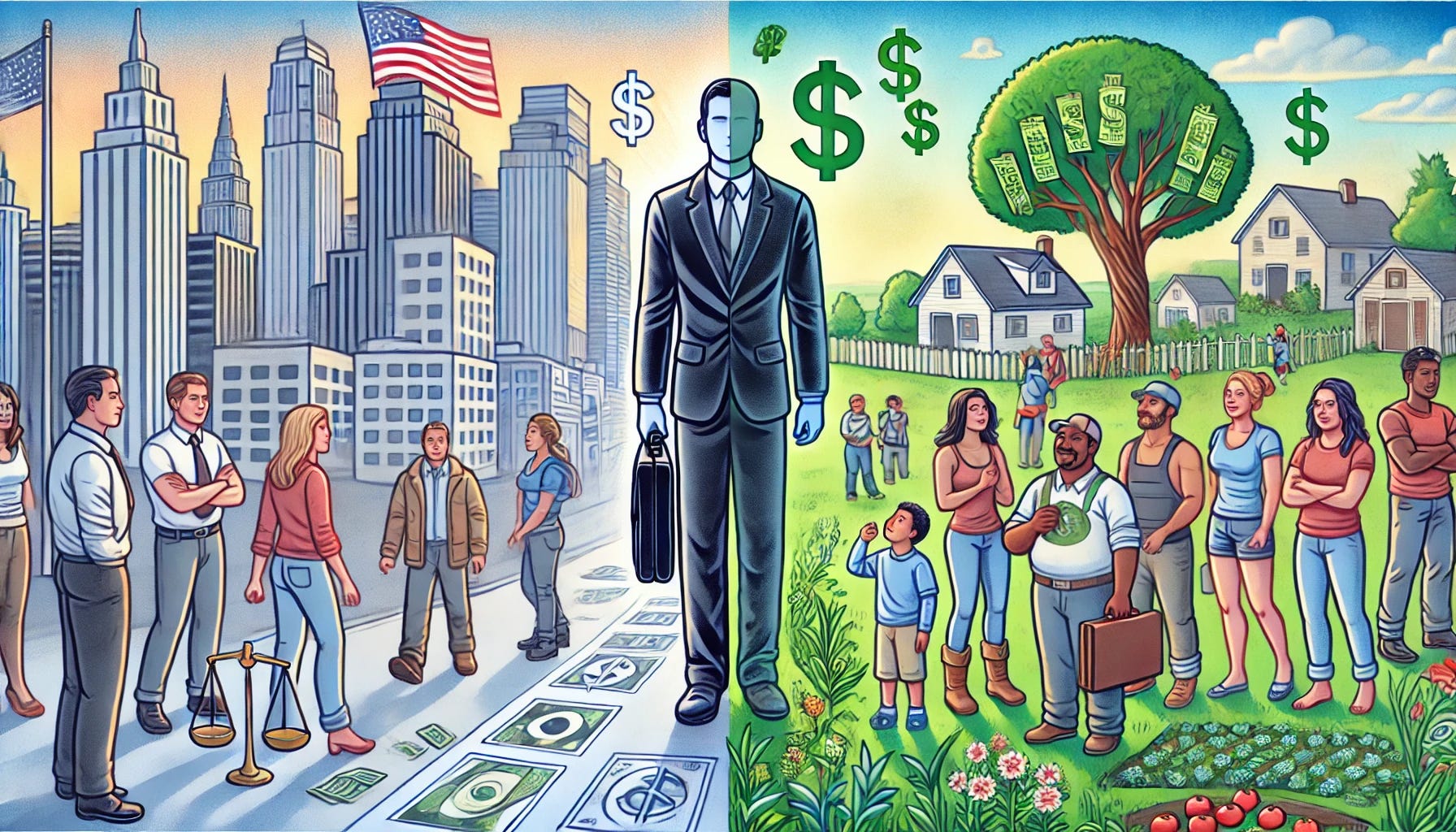
If Kamala Harris had merely advocated for more collectivist ideas in the same value climate, she would not have garnered more votes than she did. A successful political strategy requires not just different ideas but also an understanding of and connection to the existing values in American society.
Trump likely won in part because he embodied the values of freedom and individual initiative that American culture holds dear, which helped him garner broad support despite the controversies surrounding him. Thus, a political alternative in the United States must consider deeply ingrained values and find a way to present progressive goals within the framework of the "American Dream," linking individual success with shared responsibility and justice.