

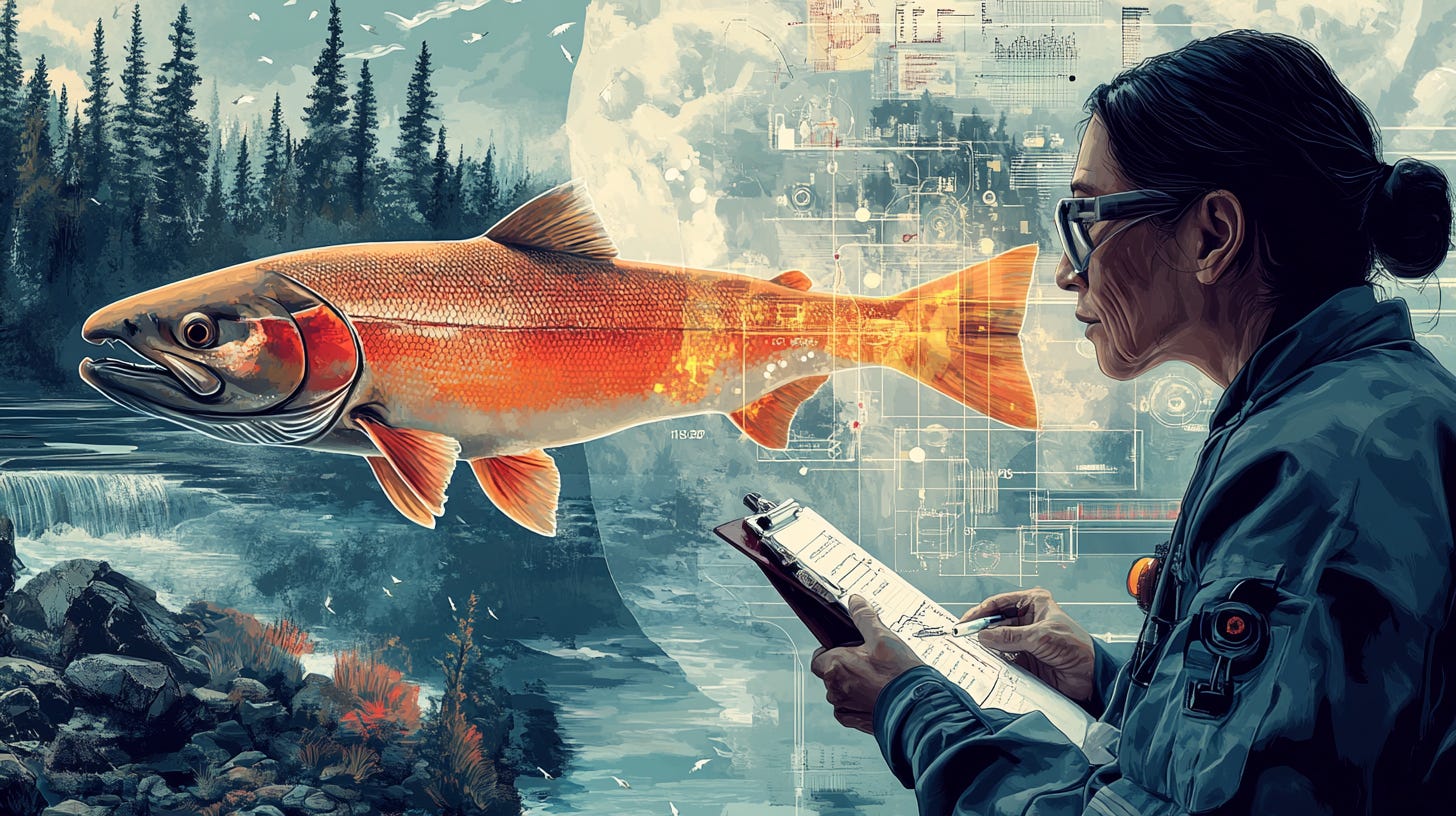
In a world grappling with complex challenges like climate change, ecological degradation, and social inequities, finding innovative, inclusive solutions is more critical than ever. One promising approach is “two-eyed seeing,” a concept introduced by Mi'kmaw Elder Albert Marshall. It promotes a worldview that integrates both Indigenous and Western knowledge systems.
While the idea seems straightforward, it requires careful consideration to avoid oversimplification. It's essential to recognize that while both knowledge systems offer valuable insights, they are distinct in their foundations and methods.
Science, as a collective human endeavor, draws on contributions from diverse civilizations and relies on empirical evidence, objectivity, and rigorous testing to achieve universal explanations. In contrast, Indigenous knowledge is holistic, intertwined with cultural practices, spirituality, and generations of environmental observation, focusing on interconnectedness and sustainability.
"Two-eyed seeing" does not claim these systems are epistemologically equivalent but rather complementary, with the potential for synergy. Each has its strengths: science excels in providing generalized, testable predictions, while Indigenous knowledge offers place-based wisdom and a deep understanding of specific ecosystems.
The idea of “complementarity” in “two-eyed seeing” goes beyond coexistence; it envisions an active partnership where each system not only fills gaps but also enriches the understanding of the other. For instance, Indigenous knowledge often provides context-specific insights that might be overlooked by broader scientific generalizations. This active partnership is evident not only in environmental conservation but also in fields like health research, where Indigenous knowledge of medicinal plants has led to new scientific discoveries.
It's also important to recognize that different knowledge systems have varying domains of strength and applicability, and one should not be indiscriminately substituted for the other. While Indigenous knowledge is invaluable, it shouldn’t replace scientific inquiry in fields requiring rigorous testing, like medicine or engineering.
The historical context of colonialism adds another layer of complexity. Science has sometimes been misused to justify oppression and exploitation, leading to skepticism within Indigenous communities. Acknowledging this historical harm is essential, and scientists must approach collaboration with humility and respect, ensuring that Indigenous knowledge is neither appropriated nor exploited.
In addition to historical harm, there is a risk of tokenism, where Indigenous perspectives are acknowledged but not meaningfully integrated into decision-making processes. Genuine collaboration requires a deeper engagement that respects the full depth of Indigenous knowledge systems.
Despite these complexities, "two-eyed seeing" offers a powerful framework for addressing contemporary challenges. For instance, in Canada, Indigenous communities have worked with scientists to restore salmon populations, combining traditional knowledge of salmon migration with scientific data to develop effective conservation strategies.
The Confederacy of Mainland Mi'kmaq received funding to integrate Mi'kmaq Ecological Knowledge with science, addressing high-priority threats and enhancing fish habitats through biological assessments and habitat restoration. Similarly, the Nova Scotia Salmon Association has undertaken projects to restore ecosystems in various rivers, promoting the recovery of aquatic species at risk by implementing activities that reduce identified threats, such as declining water quality.
Indigenous peoples have accumulated generations of observations on salmon migration patterns, spawning habits, and habitat preferences. This intimate familiarity with local ecosystems provides insights into salmon behavior that may not be captured through conventional scientific methods. For instance, Mi'kmaq observations about the timing of salmon runs and the relationship between water temperature and spawning success provided critical data points that science had not fully understood, leading to better-targeted conservation measures.
Salmon also hold profound cultural and spiritual importance for many Indigenous communities. This relationship fosters a stewardship ethic that prioritizes the long-term health of salmon populations and their habitats, aligning conservation efforts with cultural values. Traditional fishing techniques, such as selective harvesting and seasonal restrictions, have been developed to ensure the sustainability of salmon populations.
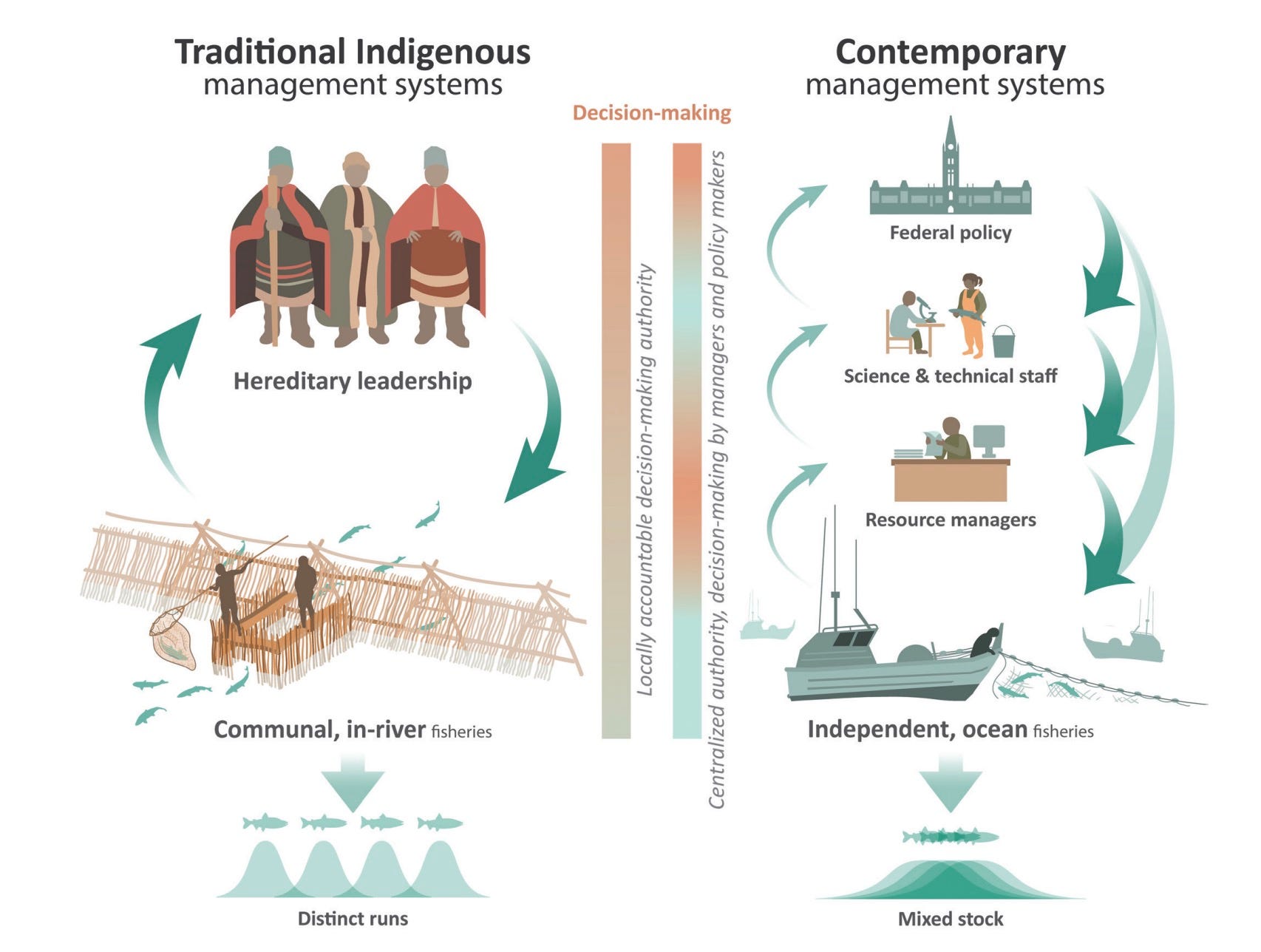
This collaboration highlights the potential of "two-eyed seeing" to generate innovative solutions that respect both knowledge systems. Other examples include integrating Indigenous healing practices with modern medicine and incorporating Indigenous perspectives into curricula, promoting a more inclusive and holistic understanding of the world.
While Indigenous knowledge offers profound environmental insights and sustainable practices, it may not provide the same level of precision required in highly specialized fields like pharmaceutical development, where controlled experimentation and statistical analysis are critical.
Ultimately, "two-eyed seeing" encourages us to embrace diverse ways of knowing and seek collaborative solutions. By acknowledging the strengths and limitations of both science and Indigenous knowledge, and by considering the complex historical context, we can contribute to a more equitable and sustainable future.
It’s also important to recognize that the term "Western science" is a misnomer. Science is not confined to any geography or culture; it is a collective human endeavor, shaped by contributions from various civilizations. From the astronomical observations of ancient Babylonians and Egyptians to the mathematical advances of Indian and Islamic scholars, the pursuit of knowledge has always been global. Therefore, framing science as "Western" obscures its rich, diverse heritage and risks perpetuating a Eurocentric view of knowledge production.
As we confront urgent global challenges like climate change and biodiversity loss, “two-eyed seeing” is not just an innovative approach—it is an essential strategy for creating resilient, sustainable solutions. By integrating these distinct but complementary ways of knowing, we can harness the full potential of human insight and innovation to create adaptive, resilient solutions for a truly sustainable future.
However, implementing “two-eyed seeing” in practice is not without its challenges. Differences in epistemologies—where Indigenous knowledge is often qualitative and contextual, while science is quantitative and reductionist—can lead to misunderstandings. Power imbalances, rooted in colonial histories, may also hinder genuine collaboration. Building trust requires time, mutual respect, and a willingness from both sides to engage in a shared learning journey.
This is a slightly adapted version of a contribution to the discussion within the World Commission on the Ethics of Scientific Knowledge and Technology (COMEST).