

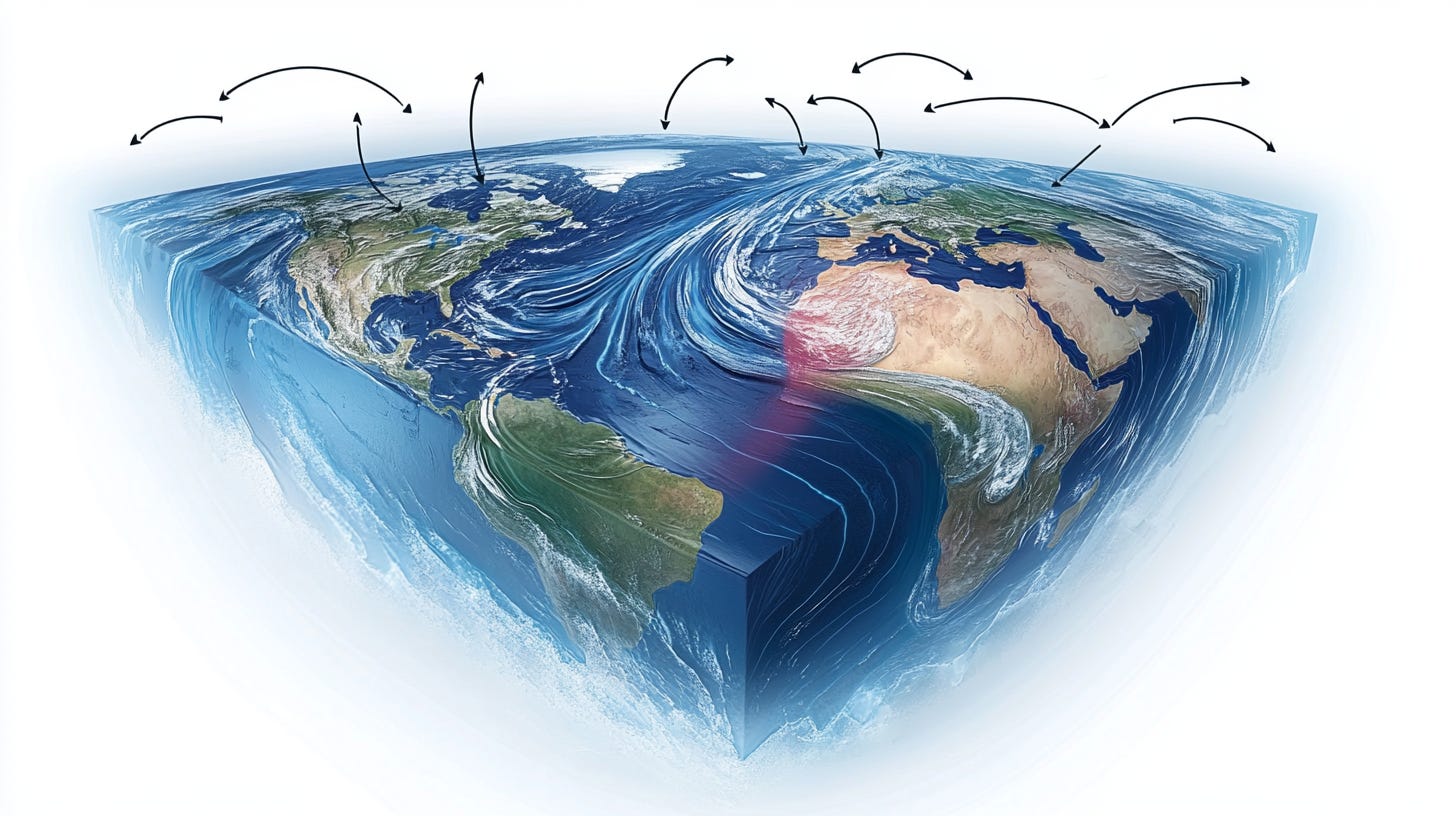
The Atlantic Ocean’s circulatory system, which plays a vital role in regulating global climate, faces increasing threats from climate change, with potential consequences for weather patterns and ocean ecosystems. A group of climate scientists recently addressed an open letter to the Nordic Council of Ministers, warning of the high probability of a major disruption in Atlantic ocean circulation. Recent scientific studies indicate that the risk of such a disruption, especially the collapse of the Atlantic Meridional Overturning Circulation (AMOC), has been significantly underestimated. A collapse of AMOC would bring disastrous and irreversible impacts, particularly for the Nordic countries, but also on a global scale.
AMOC: A Critical Regulator of the Global Climate
The Atlantic Meridional Overturning Circulation (AMOC) is one of the most important mechanisms in the ocean and climate system, responsible for transporting heat across the Atlantic Ocean. In this process, warm and salty water flows from tropical regions northward, where it cools, becomes denser, and sinks to the ocean floor, traveling back toward the equator. This cycle functions like a global heat conveyor belt, greatly influencing the climate of the North Atlantic region, particularly in Europe and North America. It also impacts other vital climate factors such as weather patterns, precipitation, and marine ecosystems.
However, climate change, especially rising global temperatures and the melting of Arctic ice, is threatening the stability of AMOC. The influx of freshwater from melting ice reduces the salinity and density of seawater, disrupting its ability to sink. If this trend continues, AMOC may slow significantly or even come to a complete halt. This would cause major disruptions in the global climate system, altering the patterns of heat and carbon movement in the oceans.
Catastrophic Consequences for Nordic Countries and the World
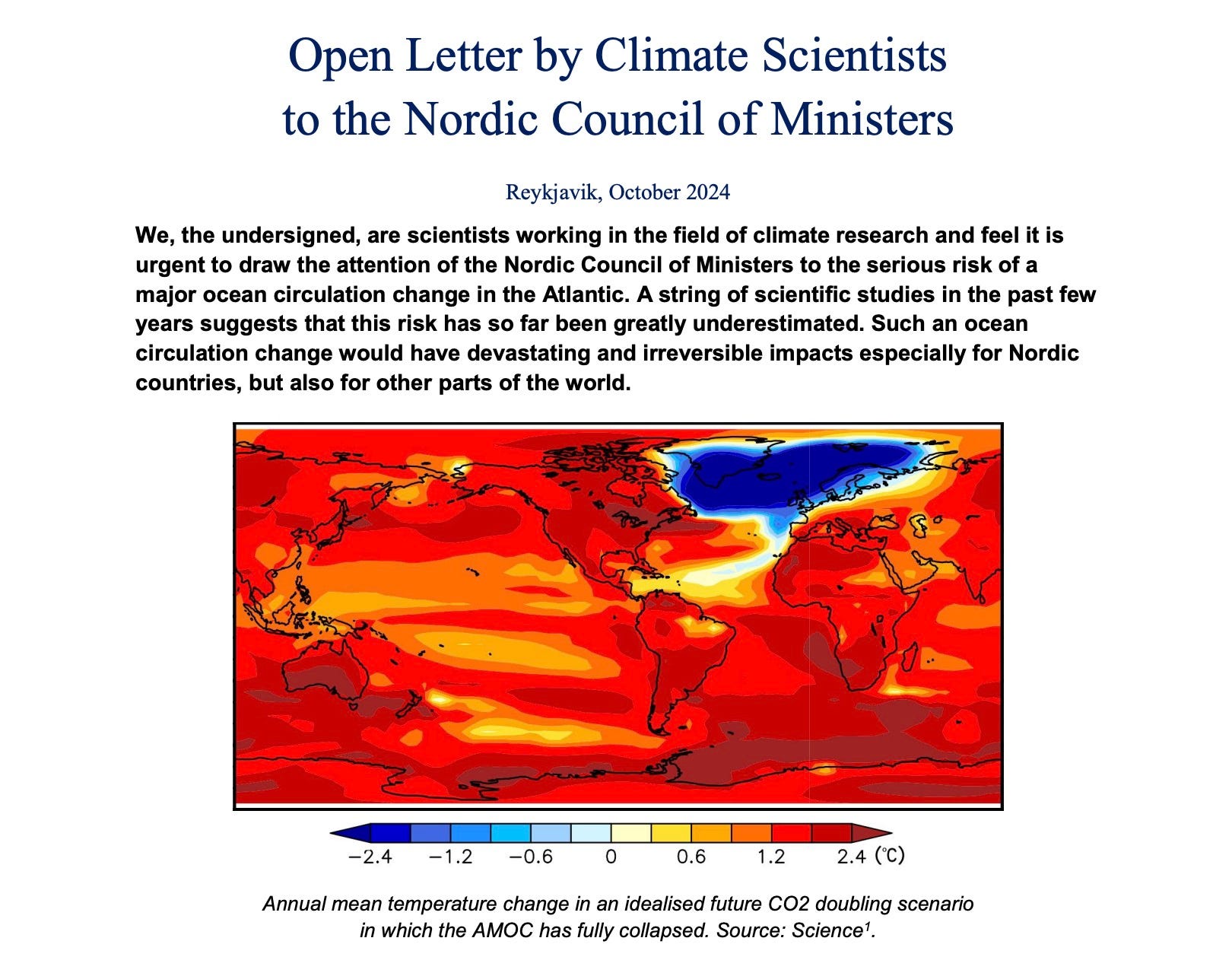
A collapse of AMOC would have far-reaching and severe consequences for the Nordic countries and the entire planet. Potential effects include substantial cooling in the Nordic region, as the loss of warm ocean currents would outweigh the warming caused by global climate change. Elsewhere, the effects could be the opposite, with intensified heatwaves, prolonged droughts, and more frequent flooding due to shifts in weather patterns. Changes in precipitation could lead to severe droughts in some areas and increased rainfall in others. Ocean ecosystems, reliant on a stable flow of nutrients and heat, would face severe disruptions, affecting fisheries and the food security of many nations. Additionally, weakened ocean circulation would diminish the ocean’s capacity to absorb carbon dioxide, speeding up atmospheric warming and leading to further ice melt and sea-level rise, especially along the Atlantic coast of the Americas.
In this context, German oceanographer and climatologist Stefan Rahmstorf emphasizes the gravity of the risk:
“A full AMOC collapse would be a massive, planetary-scale disaster. We really want to prevent this from happening. In other words: we are talking about risk analysis and disaster prevention. This is not about being 100% or even just 50% sure that the AMOC will pass its tipping point this century; the issue is that we’d like to be 100% sure that it won’t. That the IPCC only has ‘medium confidence’ that it will not happen this century is anything but reassuring, and the studies discussed here, which came after the 2021 IPCC report, point to a much larger risk than previously thought.”
(Author’s note: In the IPCC’s terminology, “medium confidence” reflects a moderate level of evidence and suggests a roughly 50-66% likelihood, indicating significant uncertainty about the outcome.)
— Rahmstorf, Stefan. “Is the Atlantic Overturning Circulation Approaching a Tipping Point?” Oceanography, vol. 37, no. 3, pp. 16–29, 2024. https://doi.org/10.5670/oceanog.2024.501
Rahmstorf’s stark warning highlights the pressing need for immediate and decisive action to mitigate the risk of AMOC collapse, which could have far-reaching impacts on climate stability. Scientists are urging the Nordic Council of Ministers to take the risk of AMOC collapse seriously and to implement measures without delay. They recommend a comprehensive risk assessment for the region and increased international pressure for swift reductions in greenhouse gas emissions. This is crucial to avoid crossing a temperature threshold that could trigger the collapse of AMOC. Limiting global warming to 1.5°C, as outlined in the Paris Agreement, remains an essential target.
Clarifying the Difference Between AMOC and the Gulf Stream
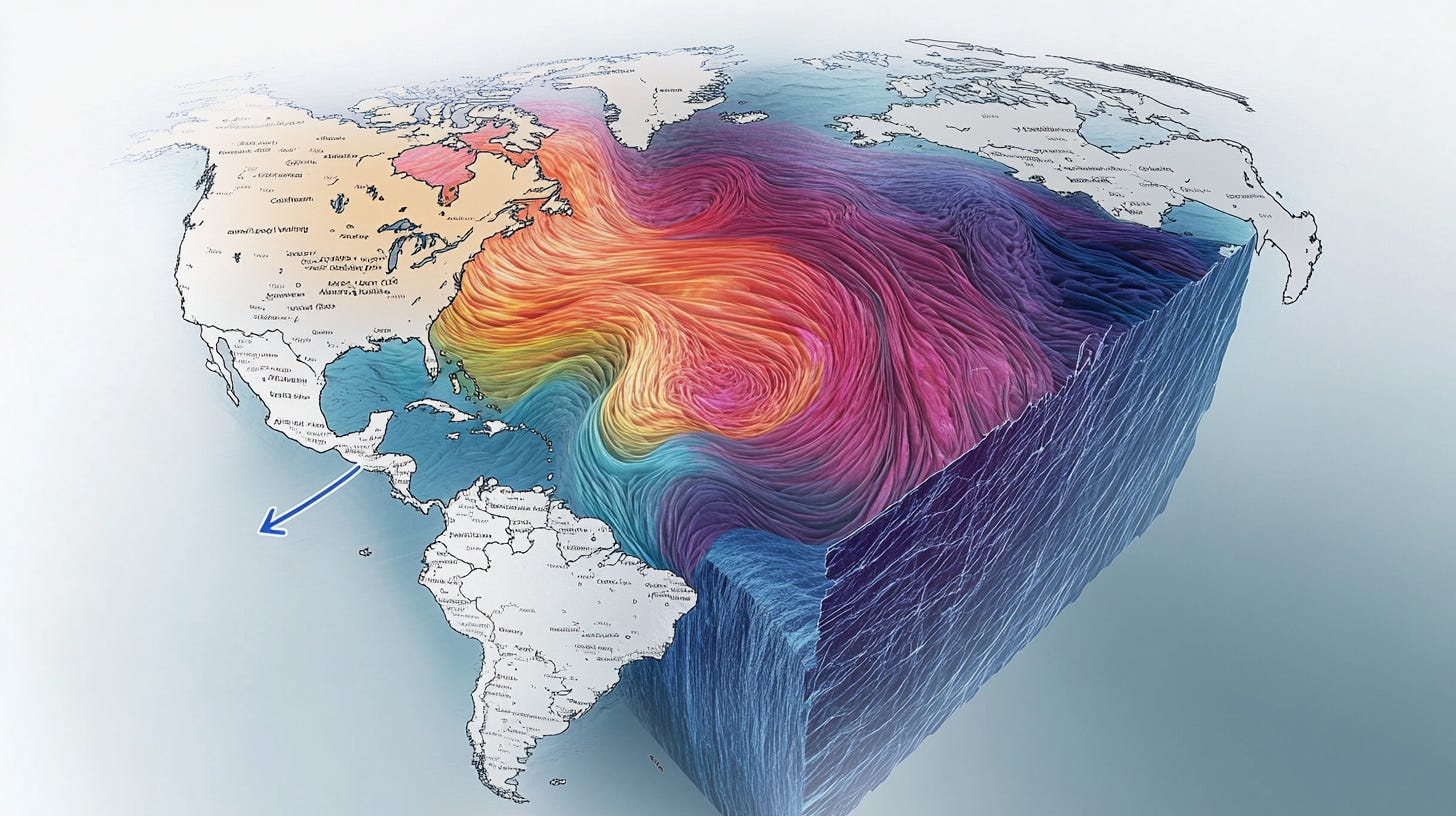
It is important to clarify the distinction between AMOC (Atlantic Meridional Overturning Circulation) and the Gulf Stream, as they are often conflated but represent different aspects of ocean circulation.
The Gulf Stream is a surface ocean current driven primarily by wind and the Coriolis effect (caused by Earth’s rotation). It transports a large volume of water mass along the eastern coast of North America toward Europe, contributing to the transfer of warm water across the Atlantic. However, its role in heat transport is relatively modest when compared to AMOC. The Gulf Stream is largely wind-driven and would not collapse even if AMOC were to slow down or stop.
In contrast, the AMOC is a deep-ocean circulation system that involves both surface and deep currents. It plays a critical role in the climate system by transporting heat from the tropics to the North Atlantic. Unlike the Gulf Stream, AMOC involves density-driven currents, where warm, salty water moves northward at the surface and cooler, denser water sinks and returns southward at depth. This density-driven component is key for heat transport and is sensitive to changes in seawater density, which can be affected by the influx of freshwater from melting ice.
The key difference is that the Gulf Stream mainly transports mass but relatively little heat, while AMOC is crucial for the transport of heat and involves less mass. It is AMOC that plays a vital role in regulating planetary climate by redistributing heat, not the Gulf Stream on its own.
While climate change will not directly halt the Gulf Stream due to its wind-driven nature, a slowdown or collapse of AMOC, caused by reduced seawater density from Arctic ice melt, could disrupt heat transport in the North Atlantic. This would not necessarily stop the Gulf Stream, but it could alter its strength and direction, leading to significant changes in climate, particularly in northern Europe.
AMOC is a vital component of the climate system, and any significant slowdown could have lasting global impacts. The Nordic countries might experience notable cooling, while other regions could face shifts in weather patterns and economic challenges. As global temperatures continue to rise, there is increasing pressure to act swiftly in reducing greenhouse gas emissions. By taking timely and decisive steps, we can help stabilize this essential part of the ocean’s circulatory system and mitigate potential risks to the global climate.